
Introduction
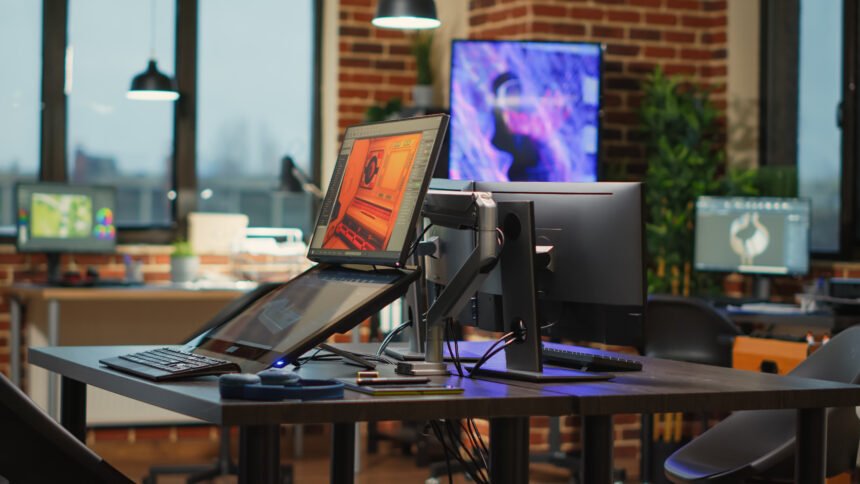
As many people have access to computers to surf the Internet, watch movies, or read books, there are some specialists who need much more powerful machines to perform their jobs. Specialized workstation computers were created to be used by people who need to complete complex tasks and processes.
Different branches like engineering, architecture, filmmaking, scientific researches, and 3D design use such devices for their work. Since these machines possess powerful processors and high-performance features, workstation computers are crucially important for specialists.
Powerful Processors for Intensive Calculations
These devices were made to perform intense computations. Therefore, they usually possess highly powerful processors which allow performing any calculations required by the software.
Specialists working with huge databases, performing scientific computations, and processing movies or other videos need such processors to perform all their tasks correctly.
High Capacity of RAM
Workstation computers also have the ability to process huge amounts of information in the form of RAM, which is very important for specialists using 3D software or video editing.
It means that they include huge amounts of RAM, enabling users to perform several demanding tasks simultaneously and without delays in work.
Professional Graphical Cards
Unlike gaming graphical processors, these graphics cards were created especially for professional work, which means that their main goal is precision and stable performance.
This characteristic is very important because it helps specialists to edit their models and work with high-resolution images without having to think about the problems that might occur.
System Stability during Intense Workloads
All devices were created to be stable during their intensive work. Many specialists use them for long-time processes when a computer needs to remain working and performing tasks consistently for several hours.
Therefore, all parts of the system are optimized to operate without errors even at the peak moments.
Application in Different Industries
There are numerous professions where such devices are required for work purposes. For example, video editors cannot work without them since the processing of movie files takes a lot of time and effort.
Engineers use them to simulate and test their new products, architects draw their buildings here, etc. This equipment enables specialists to realize their ideas.
Conclusion
Such computing devices are one of the most productive computers that people can find at the moment. Due to powerful processors, RAM, special graphics cards, and system stability during heavy loads, workstation computers are crucial for specialist work.
Although not everyone needs such devices, they are extremely helpful for different industries and professions. They can become even more relevant in the nearest future.