
Introduction
Today, artificial intelligence becomes one of the major innovations that influence the development of smartphones. Contemporary mobile devices are not just communication tools anymore; they transform into machines that learn the behavior of their owners and adjust accordingly. In addition, smartphone processors become powerful enough to conduct AI calculations locally, which allows users to experience greater speed.
Use of Artificial Intelligence in Smartphones
There are numerous fields where smartphones employ artificial intelligence. They include photography functions, voice assistance services, battery optimization, as well as enhanced security measures. In addition, the evolution of smartphones’ processors allows performing complex AI operations directly on-device.
Improving Photography Functions
One of the most obvious examples of AI application in smartphones is photography. Today, the cameras of smartphones recognize scenes, objects, and lightings, and adjust parameters to ensure better results. Some companies also utilize special algorithms, which help stitching images into a single picture from several shots taken consecutively. As a result, even people lacking photographic skills are able to obtain impressive pictures thanks to smartphones.
Voice Assistance
The second widely-spread application of AI in smartphones is the incorporation of virtual assistants. They help the users complete all kinds of actions by voice. Users can dictate messages, check the forecast, set alarm clocks, search something online and other actions without having to interact physically with the device. AI voice recognition continues to evolve constantly becoming able to recognize natural speech patterns.
Energy Management
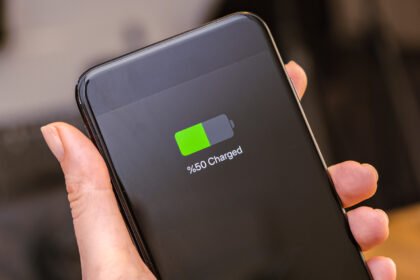
In addition, AI is useful in enhancing battery performance in smartphones. AI algorithms observe the interactions between users and the device and change background processes according to their significance. When the owner of a smartphone does not pay attention to certain applications, the system decreases the number of actions they do. As a result, users are able to optimize battery performance.
Enhanced Security Measures
Another field where artificial intelligence helps improve smartphone function is security. One of the most obvious applications of AI technology is face and fingerprint recognition, which has recently become very common. Additionally, some AI systems help analyze the behavior of smartphones to detect any suspicious actions. Thus, the system may recognize malicious actions, which do not conform with the pattern of regular usage.
Future Prospects of AI Applications in Smartphones
According to current predictions, the application of artificial intelligence in smartphones is only expected to increase further. Among other things, there will be more advanced algorithms for personal assistance and predicting users’ needs. Furthermore, the ability to conduct AI calculations on-device due to processors’ evolution will greatly contribute to the efficacy of smartphone performance.
Foldable Smartphones
Apart from introducing new technologies to mobile phones, developers are focused on designing unique devices. An innovation recently applied to smartphone design was introduced by Samsung: foldable smartphone became available for purchase last year. However, since its cost is currently relatively high, it may require further improvements in terms of durability and performance before becoming mainstream.
Conclusion
Thus, AI significantly contributes to developing smartphones into adaptive tools for their owners. Such features as advanced cameras, voice recognition technology, battery optimization, and security are examples of AI use in modern smartphones. Moreover, further developments of the technology are expected to provide smartphones with more interesting solutions.