

Introduction
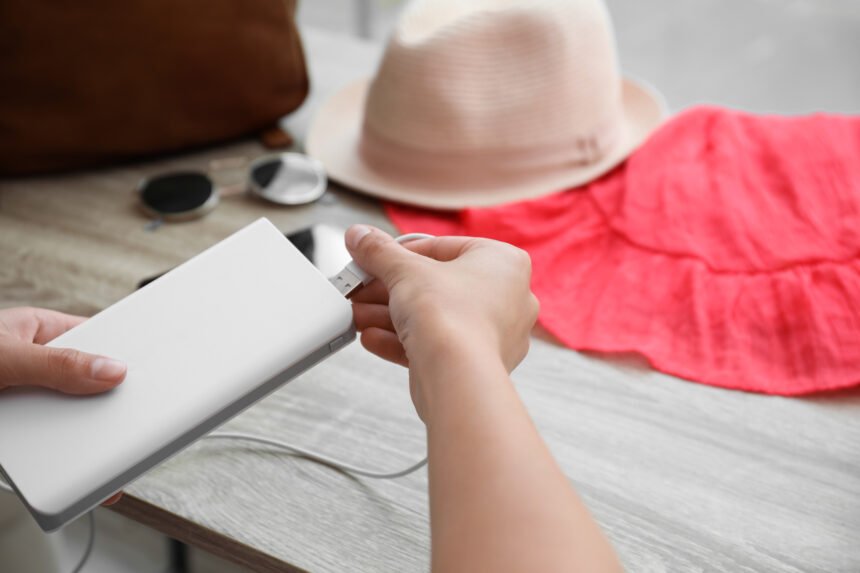
Nowadays smartphones and similar devices have become indispensable means of communication, entertainment, and work. However, intense usage can lead to excessive battery drainage within the day. Portable power banks have become an excellent means of coping with this issue. With their help, one can recharge a phone, tablet, or another gadget without any access to power sockets.
There are many varieties of power banks on the market regarding size, charging speed, number of charging ports, battery capacity, etc. The choice of a power bank depends on many factors including personal preferences. Therefore, the discussion of the most important characteristics of these devices can help users pick proper ones.
Charging Speed
Another important characteristic when buying a power bank relates to its charging speed. There are a lot of models today that are capable of fast charging.
The function will be very convenient for users who require fast charging during breaks in work.
Number of Charging Ports
Some of the latest power banks contain several charging ports, which enables their users to charge several gadgets at the same time.
In particular, one can use such devices to charge a smartphone, tablet computer, or wireless earbuds using just one power bank.
Size and Portability
As mentioned above, all power banks are characterized by the feature of portability; however, some of them tend to be larger than the others because of increased battery capacity.
Therefore, users who value portability and convenience of the device should pay attention to the size of the model they plan to buy.
Safety Features
Good power banks have protection mechanisms that prevent possible problems related to overheating or overcharging of devices.
Thus, buyers should always consider the safety protection factor before purchasing a product since it will keep gadgets healthy and working properly.
Build Quality and Durability
A good power bank should be durable enough for regular usage by travelers and other customers. One of the key indicators of durability relates to the quality of the outer shell of the product.
The quality of the housing is crucial to prolonging the life of the device.
Conclusion
It can be concluded that today portable power banks have become an indispensable accessory for owners of smartphones that require regular recharging during the day. When picking the best power bank, one should take into account its characteristics, including battery capacity, charging speed, number of charging ports, portability, protection mechanisms, and durability.