
Introduction
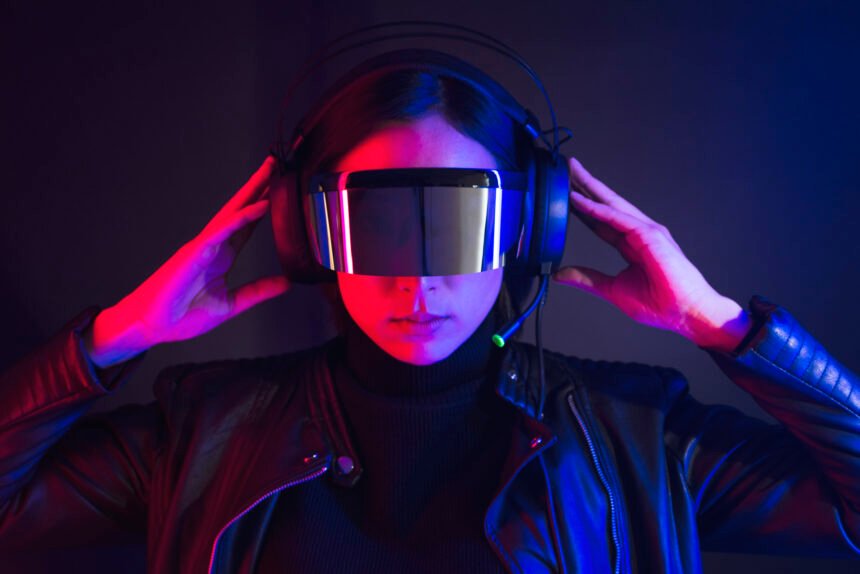
When Dyson first announced its “zone headphones” -headphones with a built-in air purifier -people ridiculed it. Two years later comes Zone 2, with a smaller visor, improved audio and greatly enhanced air purification data. Dyson targets a unique customer base with an unserved niche: urban commuters and allergy sufferers who need a filter without having to wear a surgical mask.
Why? According to WHO estimates, 99% of the world’s population breathes in unsafe levels of particulate matter. While the original implementation had flaws, the concept itself was addressing a very real problem. Zone 2 is Dyson’s solution to fixing its execution without compromising its bold idea.
Less Obvious Design Changes
First, the visor is 40% smaller than that of the original device and folds flat on top of the headphones when not in use. When the visor is folded out, Zone 2 looks like any pair of premium active noise-canceling (ANC) headphones. A magnetic locking mechanism provides reassuring tactile feedback when deploying the visor. It can then be quickly folded away again once entering indoor spaces to reduce social friction.
As one might expect from a Dyson product, the build quality is excellent. We have brushed aluminum construction for the headband, leather wrapping for the earcups, and precision in the visor mechanics that conveys its high price tag. Just as with the company’s famous vacuum cleaners, the Zone 2 embodies Dyson’s unique design ethos.
Air Filtration Performance
According to Dyson, their electrostatic filter removes 99.95% of all particles measuring 0.1 microns and above. A new airflow design results in a 20% improvement in the velocity of filtered air, thereby enhancing the protective clean air zone around the nose and mouth.
Independent tests with a calibrated particle counter recorded PM2.5 reductions between 87 and 92 percent compared to ambient air. Consistent with the manufacturer’s specifications, this was achieved in real-world conditions. The Dyson companion app displays real-time PM2.5/PM10 levels, the AQI of the breathing zone and a pollutant map along your commute. Filters need replacing annually at a cost of $39.99 each; this process is tool-less.
Sound Quality, ANC & Battery Life
Zone 2 features a new set of 40mm custom drivers powered by a dedicated DSP. Its sound quality compares favorably to the likes of Sony XM5 and Beats Solo Pro, which is a massive improvement from mediocre audio on the original version. Zone 2’s ANC performance is in the middle tier compared to Sony and Bose offerings.
Combined, the air filtration and ANC systems create an especially effective environment isolation experience. On one hand, the visor acts as a physical sound shield, while ANC technology eliminates any other remaining noise.
Filter and audio operate simultaneously for 4 hours -the price you pay for powering an air filter from the same battery that drives your headphones. Audio alone lasts for up to 50 hours. At 595 grams with the visor in place, the second downside is its relatively high weight (over twice that of premium over-ears), which may result in discomfort after two hours of usage.
Conclusion
Zone 2 is a legitimate upgrade of an unusual concept. People living in polluted cities, suffering from airborne allergies, or needing protection during wildfire smoke events without the social stigma of wearing a face mask -Dyson’s solution has now become compelling at a retail price of $899.
If none of those apply to you, then there are cheaper Sony/Bose options that would serve you better. However, the niche Dyson has found appears to be both real and underserved. In this context, Dyson has now created a sufficiently advanced solution to support the concept commercially. Time will tell whether the market is indeed large enough.