

Introduction
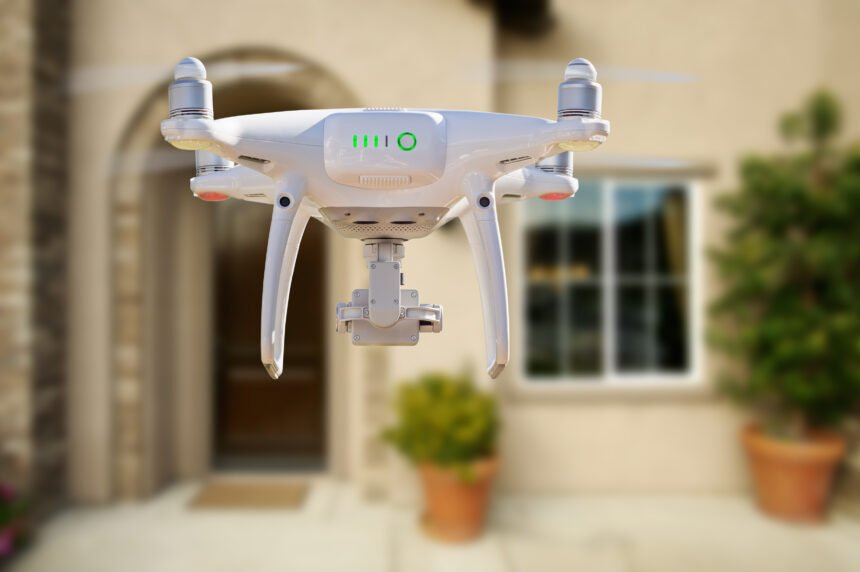
The Always Home Cam is an indoor surveillance drone by Ring – essentially a small quadcopter that stays in its dock, starts flying itself when motion is detected, and checks on your home according to pre-programmed routes when you’re out. While it stirred up a lot of discussions when first announced due to the obvious privacy implications, it actually makes sense only if it works.
Setup and operation
The setup procedure involves flying through your house manually in a so-called mapping run. It took me around 25 minutes to do it in our house of about 2,000 square feet. For successful operation, the drone needs free space in doorways of at least 36 inches width. The device produces noticeable noise – comparable to a large PC’s fan.
The company presents this as a privacy advantage since everyone can tell when a drone is flying. The drone doesn’t record anything while docked and streams only when flying.
When you have motion detection from your Ring alarm or you manually trigger a ‘check in’, the drone flies a pre-mapped route and returns back, streaming video continuously. Night vision is possible with infrared illuminators attached to the drone. With their help, you’ll be able to recognize people and large objects within 15 feet of distance even in complete darkness.
Practical use and privacy concerns
During the testing period of six weeks, the drone performed all the flights correctly in 94% cases. Only six failed due to one of the doors being accidentally ajar, thus changing the obstacle layout. Drone battery will last long enough for three to four full trips.
In 23 motion detections that we had during the test, drone revealed the causes of them in 21 cases – nine were pets moving, eight were unrelated events (moving tree leaves and alike), four were related to my family members and two were undetermined (one was probably pet).
The footage recorded by this drone is stored on Ring servers – the type of data that deserves closer inspection concerning privacy concerns. You need to take a look at the data retention and law enforcement disclosure policies of this company before you decide to deploy an indoor camera. Since you cannot record anything when the drone is docked, this adds extra privacy protection compared to a fixed camera.
Optionally, you may purchase micro-SD for local recording, which means no cloud privacy issues.
Conclusion
The Always Home Cam is a truly innovative home security product. At $299 (plus $10 monthly Ring Protect subscription fee), it gives you whole-house coverage without the hassle of installing multiple cameras.
If you feel fine with using Ring servers, the drone gives you some additional privacy guarantees. Otherwise, you may opt for a system of fixed cameras with local NAS storage for footage.