
Introduction
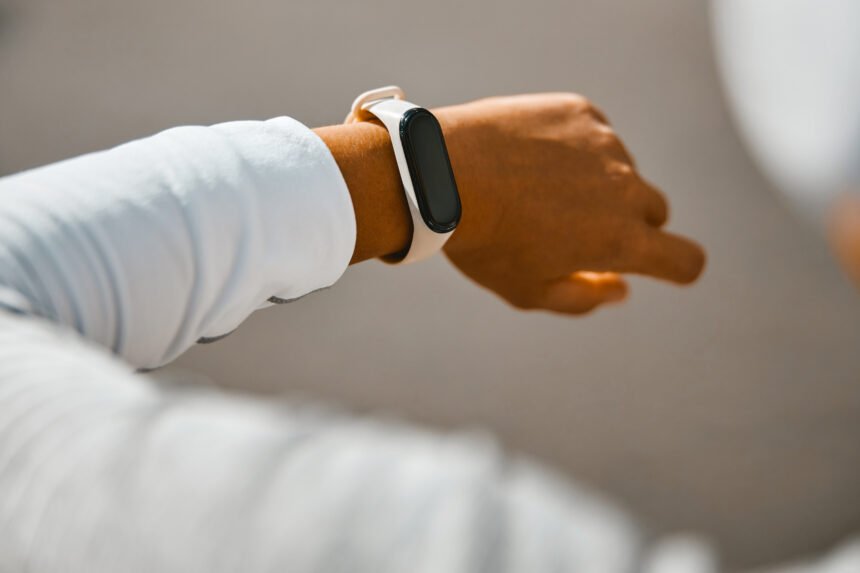
Wearable technology has been gaining popularity in recent years because people pay more attention to maintaining health and performing sports activities. Fitness trackers are one of the most widespread types of wearable technology since these gadgets can help users keep healthy. These devices are much smaller and simpler than smartwatches, but their main task is to monitor physical activity and promote health improvement.
Fitness Trackers Uses
People usually put fitness trackers on when they want to monitor their daily activity and evaluate exercise results. Users can put trackers on to observe their steps, heart rate, sleep quality, and the number of burned calories.
As technology advances, fitness trackers acquire new capabilities to monitor users’ physical state and help them achieve better results while exercising. For example, modern devices can detect users’ movements while sleeping and provide feedback about sleep quality.
Design and Comfort
It is crucial that these devices are small and do not weigh too much. Therefore, wearing a fitness tracker does not interfere with users’ normal activity.
Most fitness trackers are designed as small bands that easily fit onto users’ wrists and remain there unnoticed all day long. Moreover, many of them are equipped with adjustable bands and water-resistant technology allowing users to swim with fitness trackers.
Activity Tracking Features
The first feature of any fitness tracker is monitoring daily physical activity. These gadgets usually possess sensors that can count steps of their wearers, estimate the distance they have walked or run, and calculate the amount of calories burned by the body.
Besides, some fitness trackers can automatically detect various exercises performed by users. Thus, people can monitor their training and progress without using other gadgets or applications.
Heart Rate and Health Monitoring
New generation fitness trackers feature a wide range of sensors that can detect heart rate and analyze its changes during the day. Besides, many fitness trackers can automatically track sleep and determine whether users had restful sleep during the night. Also, these devices monitor users’ stress level and provide feedback on their health condition.
Battery Life and Charging
One of the essential advantages of fitness trackers is the battery duration since the gadget focuses mostly on health monitoring rather than running numerous programs and apps. Therefore, many devices can operate for several days without being charged.
Furthermore, some trackers have battery capacities that allow them to work more than a week. In other words, this feature increases the convenience of these gadgets.
Conclusion
Thus, fitness trackers became valuable items for health-conscious people due to numerous options provided by these devices. Step tracking, heart rate control, sleep analysis, and connection to smartphones allow users to evaluate their physical state and make necessary adjustments. Even though these gadgets cannot replace professional equipment, they still can help people get better at exercise and maintain good health conditions.