
Introduction
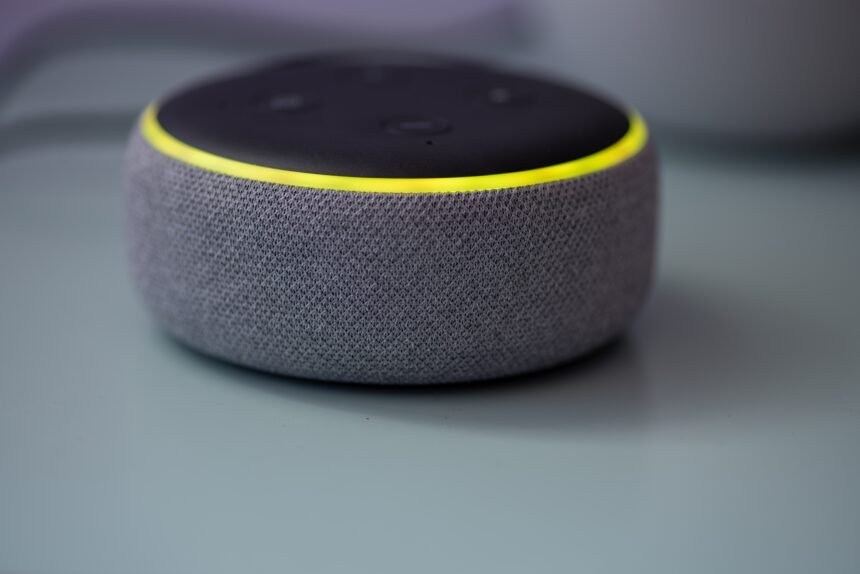
Today, smart technologies have been extensively developed and introduced into daily life. The gadget that has become a popular element of each smart house is the smart speaker. The main characteristic of a smart speaker is combining functions of an ordinary speaker with those of a voice assistant which enables one to perform various digital operations with voice commands.
- Introduction
- The Importance of Smart Home Speakers
- Functions of Voice Assistants
- Good Audio Characteristics of Smart Speakers for Music and Other Entertainment
- Features to Provide Control over a Smart House
- Functionality to Work with Other Devices and Connect to Them
- Compatibility with Various Services
- Issues with Privacy and Ways to Overcome Them
- Conclusion
The Importance of Smart Home Speakers
The task of any speaker is to provide people with a convenient opportunity to perform everyday operations, for instance, listen to music, obtain weather forecasts, control smart home devices, and set alarms. Due to their simplicity of utilization and numerous capabilities, speakers have become a center of activity in a lot of connected houses.
Functions of Voice Assistants
There is no doubt that the core functionality of any smart speaker is associated with its voice assistant. When a user gives a certain command, a device starts to interact with people by answering questions and executing orders without any physical contact between it and users.
Good Audio Characteristics of Smart Speakers for Music and Other Entertainment
In addition to its voice assistant feature, the speaker provides people with opportunities to play music, podcasts, audiobooks, etc., and, as a rule, there is a good audio driver included in speakers to deliver high-quality sound.
Features to Provide Control over a Smart House
Speaking about some smart speaker, one should mention that they serve as central control hubs for all devices in smart houses. Thus, one can easily connect smart light bulbs, thermostats, security cameras, and other appliances via a speaker system.
Functionality to Work with Other Devices and Connect to Them
As was mentioned before, speakers need a Wi-Fi connection to be utilized properly. Thus, they enable people to use their phones, tablets, or other smart gadgets while listening to music or performing any other actions.
Compatibility with Various Services
Nowadays, speakers provide people with opportunities to work with multiple online resources, such as music streaming services, voice assistants’ services, or home automation services.
Issues with Privacy and Ways to Overcome Them
One should admit that there are issues with privacy because, first of all, smart speakers use voice recognition technology which requires the presence of microphones in speakers. However, manufacturers have already solved this problem; there is a possibility to mute microphones.
Conclusion
To sum up, nowadays smart home speakers are rather versatile devices combining the functions of entertainment and useful tools that make it possible to get the required information.