
Introduction
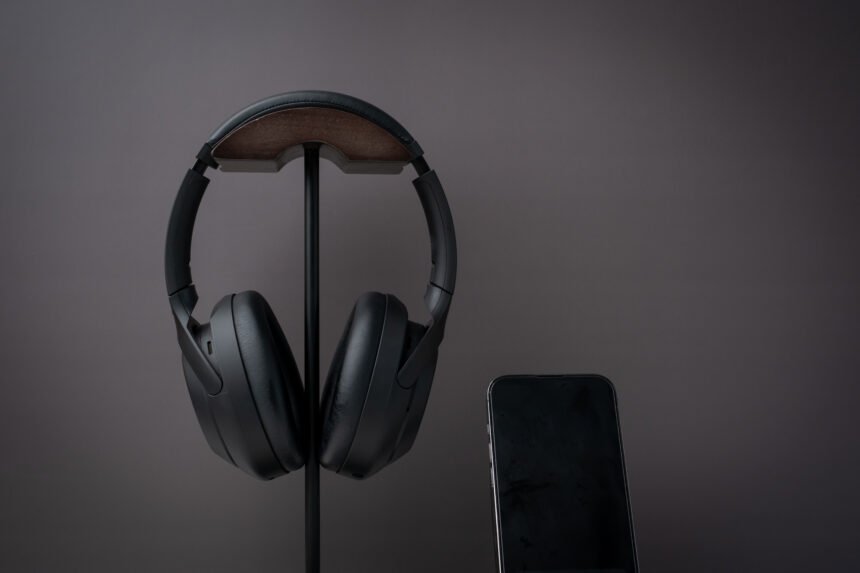
Sony’s WH-1000XM6 arrives with the comfortable confidence of a champion defending its title. The XM5 held the top spot in premium noise-cancelling headphones for two years against fierce competition from Bose and Apple. The sixth generation doesn’t reinvent the formula -it sharpens every dimension of it, resulting in headphones that are harder than ever to fault.
The WH-1000X series has been Sony’s flagship ANC product since 2017, and each generation has incrementally but meaningfully improved on its predecessor. The XM3 set the benchmark; the XM4 refined it; the XM5 rebuilt the chassis and elevated sound quality significantly. The XM6 is the refinement of the XM5 -the same design philosophy executed with a new processor, revised driver, and four additional hours of battery life.
After four weeks of daily use across airplane flights, open-plan offices, home studios, and outdoor environments, here is the complete picture of where the XM6 leads, where it matches, and where it still falls short.
Noise Cancellation: A Step Change
The XM6 uses Sony’s new QN3 chip, which processes ANC feedback at twice the sampling rate of the QN2 in the XM5. The practical effect is more precise cancellation of higher-frequency sounds -air conditioning systems, keyboard clatter, and the high-pitched whine of aircraft engines are now notably more attenuated than on any previous Sony model.
In a direct side-by-side comparison with the Bose QuietComfort Ultra, the Sony edges ahead on low-frequency rumble while the Bose maintains a slight edge on mid-frequency office noise. What is genuinely new is the XM6’s handling of the 2–4kHz frequency range -where human voices and HVAC systems create most office distraction. The QN3’s higher sampling rate allows more accurate response without the slightly hollow feeling that earlier Sony ANC sometimes introduced.
The adaptive ANC mode uses machine learning running on the QN3 to continuously adjust the ANC profile based on the ambient sound environment -shifting toward transport-noise mode when it detects rhythmic low-frequency rumble, and toward office-optimized mode when it detects open-plan workspace signatures. In testing, the transitions are seamless and the mode detection is accurate across diverse environments.
Sound Quality: More Balanced
Sony has retuned the XM6’s driver to reduce the ‘V-shaped’ frequency response in the XM5 -elevated bass and treble with a slightly recessed midrange. The XM6 is more balanced, with better midrange presence that improves vocals and acoustic instruments while retaining the satisfying bass response that mainstream listeners expect.
The 40mm driver has been rebuilt with a new carbon fiber composite diaphragm with silk dome center -combining rigidity for accurate high-frequency reproduction with damping characteristics that prevent metallic resonance artifacts at high volumes. LDAC codec support at up to 990kbps remains the headline wireless audio specification for Android users, delivering audible improvements in cymbal decay and instrument separation compared to SBC/AAC.
The 360 Reality Audio spatial processing with head-tracking now feels genuinely useful rather than gimmicky -the tracking is fast and accurate enough that the spatial soundstage feels stable during normal head movements, making it practical for music listening and movie watching rather than just demonstration.
Battery Life and Comfort
Battery life is rated at 40 hours with ANC on -an improvement from 30 hours on the XM5. Quick charge gives you 3 hours of playback from a 3-minute charge. The extended battery changes the practical charging cadence: at 40 hours, heavy users go 3–4 days between charges rather than the 2–3 days the XM5 required.
The headband padding has been revised with a new foam compound that distributes clamping force more evenly. After four hours of continuous use, the XM6 is noticeably more comfortable than the XM5. The ear cushion material uses a new synthetic leather with micro-perforations that increase breathability by approximately 20%, reducing heat buildup during extended wear in warm environments.
USB-C charging cable, 3.5mm analog cable for wired use, hard-shell carrying case, and airplane adapter are all included -one of the most complete accessory bundles in the premium ANC category.
Smart Features
Sony Connect app integration provides auto-pausing, Speak-to-Chat, granular EQ adjustment, and multipoint connection for simultaneous connection to two devices. New this generation: AI-powered ‘Adaptive Sound’ mode that uses the connected device’s GPS and ambient sound analysis to automatically select the optimal ANC profile -switching between transport, office, and outdoor modes without input. In two weeks of commuting and office use, mode detection was accurate approximately 90% of the time.
Verdict and Conclusion
At $379, the XM6 is the benchmark by which all premium ANC headphones should be judged. For existing XM5 owners, the upgrade is meaningful but not urgent -buy the XM6 when you’re due for a new pair. For anyone entering the premium ANC category or upgrading from XM4 or older, the choice is clear.
Against the Bose QuietComfort Ultra ($429), the XM6 offers stronger low-frequency ANC, better battery life, and more comprehensive smart features at a lower price. Sony WH-1000XM6: best-in-class noise cancellation, improved sound quality, industry-leading battery life. The premium noise-cancelling headphone title belongs to Sony, again.