
Introduction
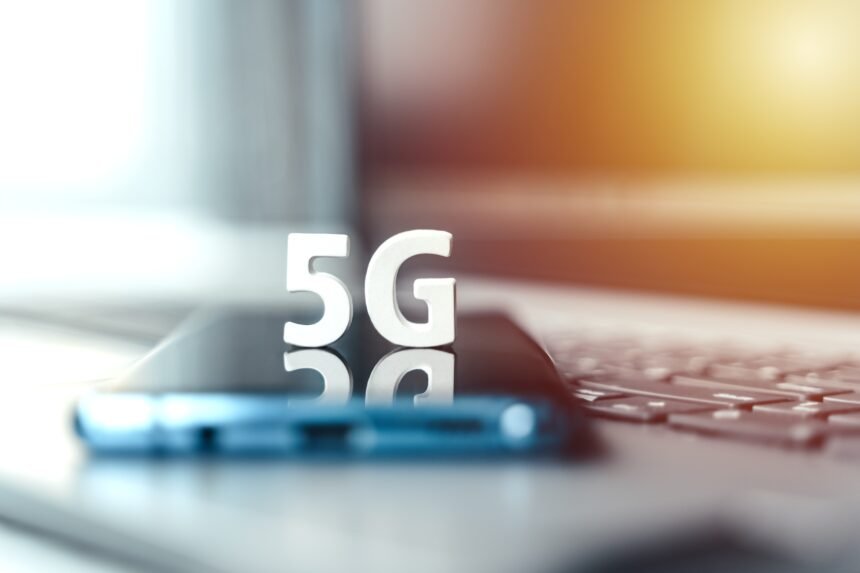
Have a look at the upper corner of your smartphone right now. You will either see the Wi-Fi symbol or the “5G” badge there. We used to believe that connecting to the home Wi-Fi network was the best option to receive a stable internet connection. Nevertheless, in 2026, this opinion seems quite outdated due to the development of cellular networks and home networking infrastructure. What is faster: Wi-Fi or cellular connection? The guide below aims to give an answer to this question based on current speeds and other key characteristics of 5G and Wi-Fi 6E.
Understanding the Contenders
First of all, let us figure out the basics of these technologies to understand their advantages and drawbacks.
What is 5G in 2026?
5G is a cellular network technology representing the fifth generation. At present, the global 5G rollout is finished in many countries. Nevertheless, there are some differences between subtypes of this type of the connection. The smartphone establishes a connection via one of the following types of 5G:
Sub-6GHz 5G
The range of this kind of network is huge since it can penetrate buildings and reach distant spots. Its speed is much higher than that of 4G-LTE but not too impressive (100 Mbps-400 Mbps).
mmWave (Millimeter Wave) 5G
It provides gigabit speeds; therefore, this type is extremely popular among tech enthusiasts. Unfortunately, it has a relatively poor range and is often interrupted by trees, windows, or even hands. Such type of connection works only in densely populated locations.
What is Wi-Fi 6E?
Wi-Fi has existed on two frequency bands – 2.4 GHz and 5 GHz – during the past two decades. These frequency bands are similar to a two-lane highway that is congested with the traffic of your neighbor’s router, smart TV, and other devices connected to the internet.
Nowadays, however, there exists a special frequency band called 6 GHz. It means that a Wi-Fi 6E connection represents eight lanes of a highway where nothing except devices using Wi-Fi 6E can pass. It is impossible to receive any interference or experience network congestion with the help of Wi-Fi 6E. It allows for a stable connection to the internet.
Head-to-Head: Which Connection Is Faster?
At first sight, there is not a big difference between theoretical speeds of 5G and Wi-Fi 6E. Both types of connections boast amazing capabilities. For example, Wi-Fi 6E is able to reach the speeds equal to 9.6 Gbps while mmWave 5G reaches the speed equal to 10 Gbps. However, theoretical speeds are irrelevant. Let’s check what happens with real-world speeds.
Real-World Speed Test
As it was stated above, a Wi-Fi 6E connection is usually faster compared to 5G. If you have fiber optic internet in your house and a high-quality Wi-Fi 6E router, your smartphone will establish a connection with the speed equal to 800 Mbps to 1.2 Gbps.
It is impossible to say that 5G is fast as the situation depends upon many factors. First of all, the connection with the speed equal to 2.5 Gbps is possible to establish only when you stand near the mmWave 5G node located in a downtown area. If you move just by a few steps away from it, your device will automatically switch to the Sub-6GHz connection and your speed will fall to the level of 200 Mbps.
Speeds Conclusion: Although 5G can be faster in the certain cases, Wi-Fi 6E boasts amazing stability.
Latency and Ping: Gamer’s Perspective
Apart from the downloading/uploading speed, it is important to consider another important characteristic of these connections – latency. As a gamer, you will probably prefer minimal latency since it guarantees no delays when playing your favorite game.
5G Latency
Although 5G is characterized by low latency (so-called ultra-low latency), it is impossible to say that the real-world 5G latency is impressive. Your device must send a signal to and receive it from cell towers in addition to traveling through long distances. Consequently, latency of a great connection varies within 25ms-40ms range.
Wi-Fi 6E Latency
Latency in case of Wi-Fi 6E connection varies in 5ms-15ms range due to three factors. First of all, the 6GHz frequency band does not offer any interference. Secondly, your smartphone is connected directly to the router situated at a close distance. Thirdly, your internet speed is great due to a fiber optic internet connection.
Conclusion
As you may see, Wi-Fi 6E connection has the smallest latency. therefore, it is better for gamers.
Battery Life: Invisible but Important
Last but not least important factor is battery life that greatly depends upon the selected type of the connection. Wi-Fi 6E connection demands less power from your smartphone than the cellular connection since the device does not need to transmit signals through such distances.
The 5G Battery Drain
The thing is that to establish a cellular connection, your smartphone has to constantly communicate with cell towers. To this end, the connection process requires sending an intensive signal to the nearest tower. What is worse, you are constantly moving and your phone has to detect new cell towers and establish connections with them. It is obvious that such operations demand much energy to be expended on them.
Conclusion
It is evident that 5G and Wi-Fi 6E cannot be considered competitors since they perfectly complement each other. In the current era, it is hard to say which connection type is better since they are both extremely developed nowadays.
Thus, Wi-Fi 6E represents the best solution when it comes to establishing the fastest and most stable connection to the internet. Nonetheless, 5G is preferable due to great speed, stability, and security when you move outside of your house.